
Technical purpose
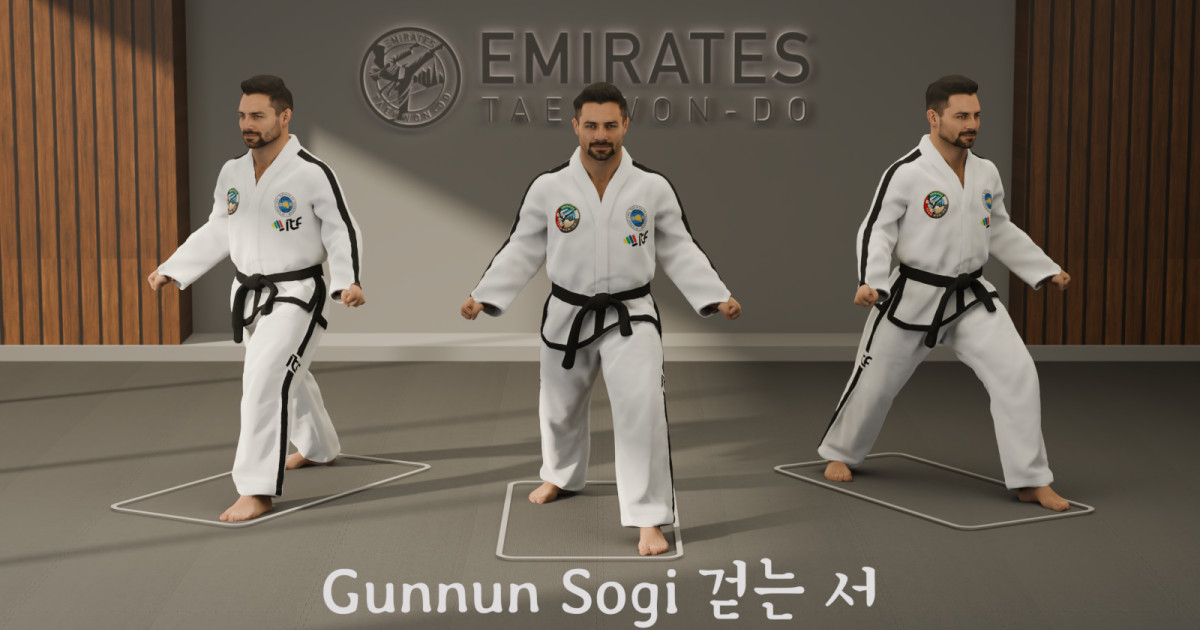
Walking Stance, called Gunnun Sogi in Korean terminology, is a strong stance used for the front and rear, both in attack and defense. It gives the practitioner a stable base for fundamental movements, pattern work, blocking, striking, and forward or backward movement.
The stance must be measured accurately. If it is too long, movement becomes slow and weak. If it is too narrow, the body becomes weak against an attack from the side. If it is too wide, it becomes weak against attacks from the front or rear.
Key principle
Walking Stance is a strong front-and-rear stance with equal weight on both feet, a bent front leg, a fully extended rear leg, and either full-facing or half-facing body position.
Stance structure
| Reference point | Correct standard |
|---|---|
| Stance name | Walking Stance (Gunnun Sogi) |
| Length | 1.5 shoulder widths |
| Length measuring point | Measured between the big toes |
| Width | 1 shoulder width |
| Width measuring point | Measured from the center of one instep to the center of the other instep |
| Weight distribution | 50% on the front foot and 50% on the rear foot |
| Front leg | Bent until the kneecap forms a vertical line with the heel |
| Rear leg | Extended fully |
| Facing | Full facing or half facing, both in attack and defense |
Foot position
| Foot | Correct standard |
|---|---|
| Front foot | Toes point forward |
| Rear foot | Turned 25 degrees outward |
| Rear foot warning | Turning the rear foot outward more than 25 degrees weakens the leg joint against an attack from the rear |
| Heel contact | Both feet should stay grounded; the rear heel should not lift |
| Foot tension | Tense the muscles of the feet with the feeling of pulling them toward each other |
कैसे स्थिति बनाएं
एक पैर को आगे या पीछे ले जाएं ताकि दोनों बड़े अंगूठों के बीच की दूरी 1.5 कंधे की चौड़ाई हो। चौड़ाई को 1 कंधे की चौड़ाई पर सेट करें, जो एक पैर के बीच से दूसरे पैर के बीच के केंद्र तक मापी जाती है।
सामने वाले पैर को मोड़ें जब तक घुटने की हड्डी एड़ी के साथ एक लंबवत रेखा नहीं बनाती। विपरीत पैर को पूरी तरह से बढ़ाया जाता है। शरीर का वजन दोनों पैरों पर समान रूप से वितरित होता है, जिसमें 50% सामने वाले पैर पर और 50% पीछे वाले पैर पर होता है।
सामने वाले पैर की अंगुलियाँ आगे की ओर इंगित करें। पीछे वाला पैर 25 डिग्री बाहर की ओर मुड़ता है। दोनों पैरों को सक्रिय महसूस करना चाहिए, जैसे पैरों की मांसपेशियाँ एक-दूसरे की ओर खींच रही हों। यह एक मजबूत स्थिति बनाए रखने में मदद करता है और आधार को ढीला होने से रोकता है।
दाएँ और बाएँ नामकरण नियम
चलने की स्थिति को मुड़े हुए सामने के पैर से नामित किया जाता है। जब दाएँ पैर मुड़ा होता है, तो इसे दाएँ चलने की स्थिति, या Own Gunnun Sogi कहा जाता है। जब बाएँ पैर मुड़ा होता है, तो इसे बाएँ चलने की स्थिति, या Wen Gunnun Sogi कहा जाता है।
यह नामकरण नियम महत्वपूर्ण है क्योंकि स्थिति को पीछे के पैर या तकनीक की दिशा से नामित नहीं किया जाता है। पहले पहचानें कि कौन सा घुटना सामने मुड़ा हुआ है, फिर स्थिति को दाएँ या बाएँ नामित करें।
Facing options
| Facing | Use in Walking Stance |
|---|---|
| Full facing | The shoulders and hips are squared toward the opponent or direction of the technique |
| Half facing | The body is angled to reduce the target area while keeping the stance structure unchanged |
Reference checklist
| Check | Correct standard |
|---|---|
| Length | 1.5 shoulder widths between the big toes |
| Width | 1 shoulder width from center instep to center instep |
| Front knee | Kneecap vertical with the heel |
| Rear leg | Fully extended |
| Weight | 50% front foot and 50% rear foot |
| Front foot | Points forward |
| Rear foot | Turns 25 degrees outward |
| Feet | Muscles tense with the feeling of pulling both feet toward each other |
| Naming | Named by the bent front leg |
| Facing | Full facing or half facing |
सामान्य तकनीकी त्रुटियाँ
एक सामान्य त्रुटि स्थिति को बहुत लंबा बनाना है। 1.5 कंधे की चौड़ाई से अधिक की दूरी से गति धीमी और कमजोर हो जाती है, विशेष रूप से पीछे की ओर चलने या हमले का जवाब देने पर।
एक और त्रुटि स्थिति को बहुत संकीर्ण बनाना है। यदि पैरों के बीच की चौड़ाई बहुत संकीर्ण है, तो स्थिति साइड से हमले के खिलाफ कमजोर हो जाती है। चौड़ाई 1 कंधे की चौड़ाई होनी चाहिए, जो केंद्र के इंस्टेप से केंद्र के इंस्टेप तक मापी जाती है।
छात्र अक्सर स्थिति को बहुत चौड़ा भी बना देते हैं। यदि पैरों के बीच की दूरी बहुत चौड़ी है, तो स्थिति सामने या पीछे से हमलों के खिलाफ कमजोर हो जाती है और गति भारी हो जाती है।
एक और महत्वपूर्ण त्रुटि पीछे के पैर को आगे की ओर मोड़ना है। यदि पीछे की अंगुलियाँ आगे की ओर होती हैं, तो पीछे की एड़ी जमीन से उठ सकती है। पीछे के पैर को 25 डिग्री बाहर की ओर मोड़ना चाहिए और जमीन पर रहना चाहिए।
छात्रों को पीछे के पैर को 25 डिग्री से अधिक बाहर की ओर मोड़ने से भी बचना चाहिए। यह पीछे से हमले के खिलाफ पैर के जोड़ को कमजोर करता है। अंतिम त्रुटि सामने के पैर को अत्यधिक मोड़ना है, जिससे वजन वितरण खराब हो जाता है और आगे के पैर से चलने और किक करना अधिक कठिन हो जाता है।