
Technical purpose
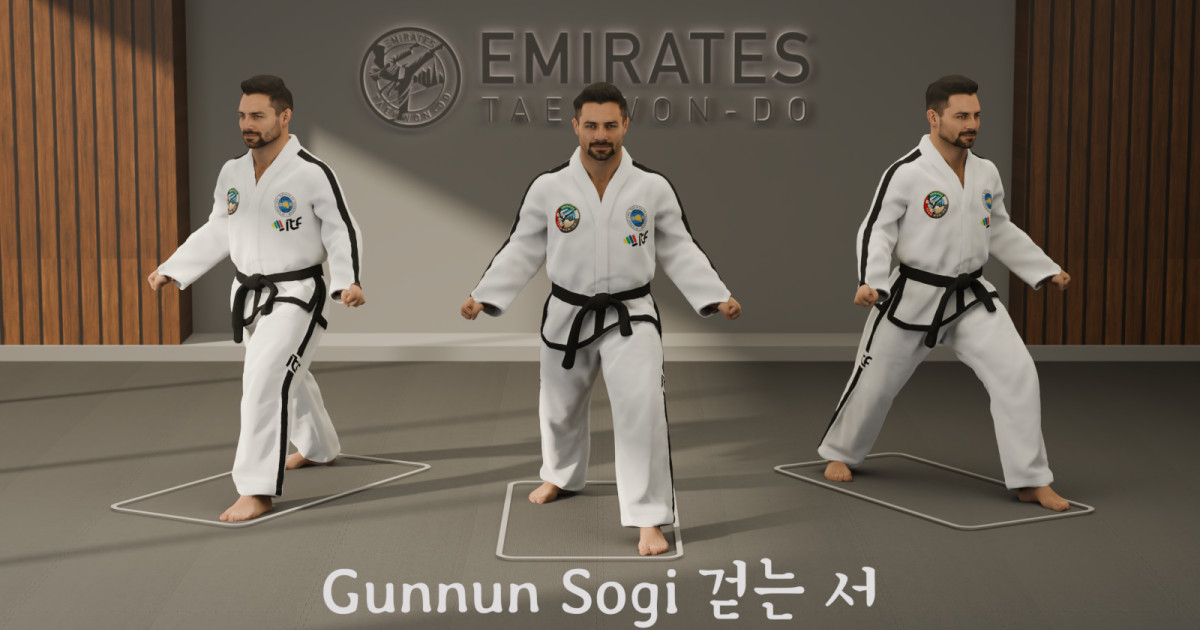
Walking Stance, called Gunnun Sogi in Korean terminology, is a strong stance used for the front and rear, both in attack and defense. It gives the practitioner a stable base for fundamental movements, pattern work, blocking, striking, and forward or backward movement.
The stance must be measured accurately. If it is too long, movement becomes slow and weak. If it is too narrow, the body becomes weak against an attack from the side. If it is too wide, it becomes weak against attacks from the front or rear.
Key principle
Walking Stance is a strong front-and-rear stance with equal weight on both feet, a bent front leg, a fully extended rear leg, and either full-facing or half-facing body position.
Stance structure
| حوالہ نقطہ | صحیح معیار |
|---|---|
| اسٹینس کا نام | واکنگ اسٹینس (گنُن سوگی) |
| طول | 1.5 کندھے کی چوڑائی |
| طول ناپنے کا نقطہ | بڑے انگلیوں کے درمیان ناپا گیا |
| چوڑائی | 1 کندھے کی چوڑائی |
| چوڑائی ناپنے کا نقطہ | ایک پاؤں کی درمیانی جگہ سے دوسرے کی درمیانی جگہ تک ناپا گیا |
| وزن کی تقسیم | 50% سامنے والے پاؤں پر اور 50% پیچھے والے پاؤں پر |
| سامنے کا پاؤں | ایسا موڑیں کہ گھٹنے کی ہڈی ایڑی کے ساتھ عمودی لائن بنائے |
| پیچھے کا پاؤں | پوری طرح پھیلا ہوا |
| موڑنا | مکمل موڑ یا آدھا موڑ، دونوں حملے اور دفاع میں |
Foot position
| Foot | Correct standard |
|---|---|
| Front foot | Toes point forward |
| Rear foot | Turned 25 degrees outward |
| Rear foot warning | Turning the rear foot outward more than 25 degrees weakens the leg joint against an attack from the rear |
| Heel contact | Both feet should stay grounded; the rear heel should not lift |
| Foot tension | Tense the muscles of the feet with the feeling of pulling them toward each other |
How to form the stance
ایک پاؤں کو آگے یا پیچھے اس طرح منتقل کریں کہ بڑے انگلیوں کے درمیان کا فاصلہ 1.5 کندھے کی چوڑائیوں کے برابر ہو۔ چوڑائی کو 1 کندھے کی چوڑائی پر سیٹ کریں، جو ایک انگوٹھے کے مرکز سے دوسرے انگوٹھے کے مرکز تک ناپی جائے۔
آگے والے پاؤں کو موڑیں جب تک کہ گھٹنے کی ہڈی ایڑی کے ساتھ عمودی لائن بنائے۔ مخالف پاؤں کو مکمل طور پر پھیلائیں۔ جسم کا وزن دونوں پیروں پر یکساں طور پر تقسیم ہوتا ہے، 50% آگے والے پاؤں پر اور 50% پیچھے والے پاؤں پر۔
آگے والے پاؤں کی انگلیاں سیدھی رکھیں۔ پیچھے والا پاؤں 25 ڈگری باہر کی طرف مڑتا ہے۔ دونوں پیروں کو متحرک محسوس ہونا چاہیے، جیسے کہ پاؤں کے پٹھے ایک دوسرے کی طرف کھینچ رہے ہوں۔ یہ ایک مضبوط حالت کو برقرار رکھنے میں مدد کرتا ہے اور بنیاد کو ڈھیلا ہونے سے روکتا ہے۔
Right and left naming rule
Walking Stance is named by the bent front leg. When the right leg is bent, it is called a right Walking Stance, or Own Gunnun Sogi. When the left leg is bent, it is called a left Walking Stance, or Wen Gunnun Sogi.
This naming rule is important because the stance is not named by the rear leg or by the direction of the technique. First identify which knee is bent in front, then name the stance as right or left.
Facing options
| Facing | Use in Walking Stance |
|---|---|
| Full facing | The shoulders and hips are squared toward the opponent or direction of the technique |
| Half facing | The body is angled to reduce the target area while keeping the stance structure unchanged |
Reference checklist
| چیک کریں | صحیح معیار |
|---|---|
| لمبائی | بڑی انگلیوں کے درمیان 1.5 کندھے کی چوڑائی |
| چوڑائی | مرکزی انسپ سے مرکزی انسپ تک 1 کندھے کی چوڑائی |
| سامنے کی گھٹنا | گھٹنے کی ہڈی ایڑی کے ساتھ عمودی |
| پیچھے کی ٹانگ | مکمل طور پر پھیلی ہوئی |
| وزن | 50% سامنے کے پاؤں اور 50% پیچھے کے پاؤں |
| سامنے کا پاؤں | آگے کی طرف |
| پیچھے کا پاؤں | 25 ڈگری باہر کی طرف مڑتا ہے |
| پاؤں | پٹھے تناؤ میں ہیں اور دونوں پاؤں کو ایک دوسرے کی طرف کھینچنے کا احساس ہوتا ہے |
| نامگذاری | مڑھے ہوئے سامنے کی ٹانگ سے نامزد کیا جاتا ہے |
| مقابلہ | مکمل مقابلہ یا نصف مقابلہ |
Common technical errors
A common error is making the stance too long. A distance over 1.5 shoulder widths makes movement slow and weak, especially when moving backward or responding to an attack.
Another error is making the stance too narrow. If the width between the feet is too narrow, the stance becomes weak against an attack from the side. The width should be 1 shoulder width, measured from center instep to center instep.
Students also commonly make the stance too wide. If the distance between the feet is too wide, the stance becomes weak against attacks from the front or rear and the movement becomes heavy.
Another important error is pointing the rear foot forward. If the rear toes face forward, the rear heel may lift from the ground. The rear foot should turn 25 degrees outward and remain grounded.
Students should also avoid turning the rear foot outward more than 25 degrees. This weakens the leg joint against an attack from the rear. The final error is bending the front leg excessively, which creates poor weight distribution and can make movement and kicking with the front foot more difficult.