
Technical purpose
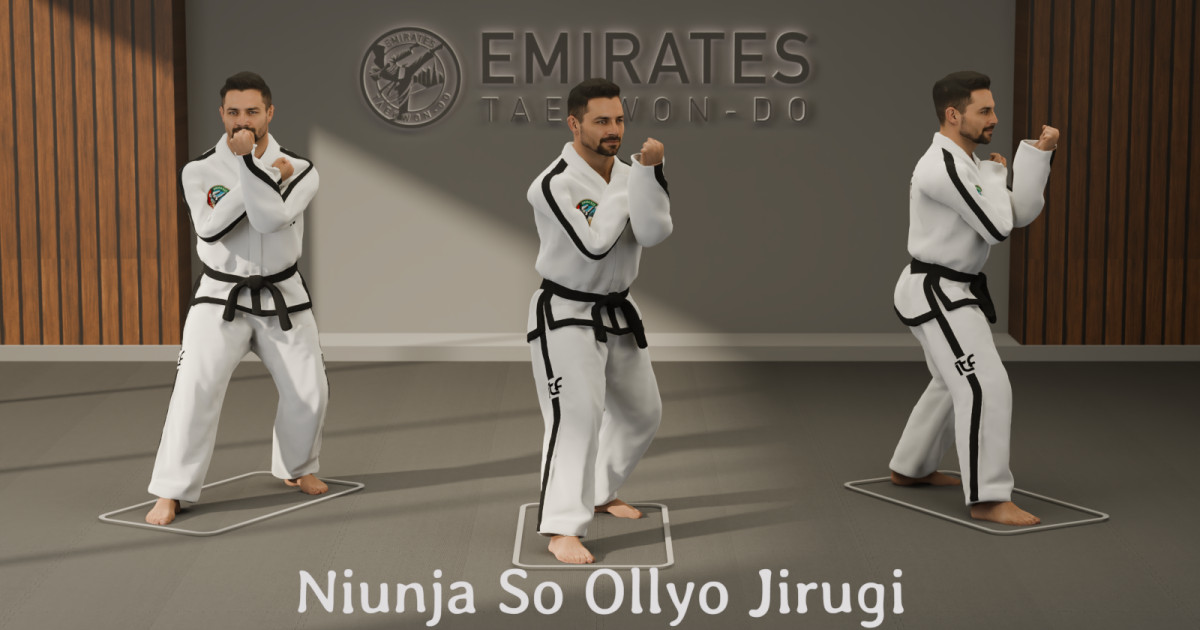
L-Stance Upward Punch, called Niunja So Ollyo Jirugi in Korean terminology, is an ITF Taekwon-Do punching technique chiefly used for attacking the face or the point of the chin at close range. The punch travels upward into the target rather than straight forward.
Although Upward Punch can be performed with nearly every stance, L-Stance and Rear Foot Stance are normally used. This article focuses on the L-Stance version, where the shoulders remain half facing and the stance stays rear-weighted.
Key principle
The upward punch attacks the face or chin at close range, with the back of the punching fist facing front and the opposite fist positioned in front of the shoulder.
Technique identity
| 项目 | 技术参考 |
|---|---|
| 技术名称 | L-stance upward punch |
| 韩语术语 | Niunja So Ollyo Jirugi |
| 简短技术名称 | Ollyo Jirugi |
| 技术类别 | 打击技术,或 Jirugi |
| 站姿 | L-stance,或 Niunja Sogi |
| 力量方向 | 向上 |
| 主要目标 | 面部或下巴尖 |
| 范围 | 近距离 |
| 肩部朝向 | 在冲击时半侧面朝向 |
L-stance base
| 站位要点 | 正确标准 |
|---|---|
| 长度 | 约1.5个肩宽 |
| 长度测量点 | 从后脚的脚剑到前脚的脚趾 |
| 脚角 | 双脚的脚趾大约指向15度内侧 |
| 重心分布 | 约70%在后腿,30%在前腿 |
| 后腿 | 弯曲并承载大部分体重 |
| 前腿 | 适度弯曲,保持轻盈以便移动 |
| 面向 | 半面对 |
Upward punch rules
| 规则 | 技术要求 |
|---|---|
| 主要用途 | 在近距离攻击面部或下巴。 |
| 常用姿势 | 通常使用后脚姿势和L姿势。 |
| 出拳拳头 | 在冲击时保持拳头背面朝前。 |
| 对侧拳头 | 将对侧拳头放在肩膀前面。 |
| 反作用力警告 | 在此技术中不要将对侧拳头拉到髋部;这样会减少反作用力。 |
| 身体结构 | 保持L姿势稳定,肩膀半面对着。 |
如何执行该技术
从正确的L-stance开始。姿势应保持狭窄、后重心和半面对。后腿承载约70%的体重,而前腿承载约30%。在出拳时不要向前移动到Walking Stance。
出拳的拳头向面部或下巴的点上方移动。这是一种近距离技术,因此动作应紧凑而直接。拳头不应像普通的直拳那样移动,也不应在宽阔的轨迹中松散摆动。
在撞击的瞬间,保持出拳拳头的背面面向前方。同时,将对侧拳头放在肩膀前面。这个对侧拳头的位置是Ollyo Jirugi的具体要求,不应被许多其他拳法中使用的标准臀部收回所替代。
半面对肩
在L姿势版本中,肩膀在冲击时应保持半面对。这与Niunja Sogi的结构相匹配,并有助于身体在近距离保持紧凑。
半面对的肩线应来自整个身体,而不是仅仅扭动上半身。姿势、臀部、肩膀和出拳的拳头必须协同工作。如果肩膀完全正对,姿势就失去了L姿势的特征。如果肩膀转得过多,拳头将失去直接的上摆线。
对侧拳和反作用力
对侧拳应置于肩部前方。这是向上拳的关键细节之一。在许多基本拳法中,对侧拳被拉回到臀部,但这并不是Ollyo Jirugi的正确关系。
如果对侧拳拉回到臀部,反作用力会减小。肩部高度的位置有助于支持紧凑的向上动作,并保持身体在近距离目标的组织。
学生们应该仔细检查这一点,因为在基础训练中,拉对侧拳到臀部的习惯非常强烈。对于这项技术,对侧拳应位于肩部前方。
参考检查清单
| 检查 | 正确标准 |
|---|---|
| 技术 | L-stance upward punch (Niunja So Ollyo Jirugi) |
| 技术家族 | 打击技术,或 Jirugi |
| 站姿 | L-stance,或 Niunja Sogi |
| 目标 | 面部或下巴尖 |
| 范围 | 近距离 |
| 方向 | 向上 |
| 肩膀 | 在冲击时半面对着目标 |
| 出拳的拳头 | 拳头背面在冲击时面向前方 |
| 对侧拳头 | 在肩膀前面 |
| 常见错误 | 将对侧拳头拉到臀部 |
Common technical errors
A common error is pulling the opposite fist to the hip. This reduces reaction force in Upward Punch. The opposite side fist should be brought in front of the shoulder.
Another error is punching straight forward instead of upward. Ollyo Jirugi must show an upward line toward the face or point of the chin.
Students also commonly lose the half-facing shoulder line. In L-Stance, the shoulders should remain half facing. If the body becomes full facing, the stance and technique lose their correct relationship.
Another frequent error is shifting too much weight onto the front leg. L-Stance should remain about 70% on the rear leg and 30% on the front leg. The stance should not become forward-heavy.
The final error is making the movement too large. Upward Punch is chiefly a close-range technique. The action should be compact, direct, and focused at the moment of impact.