
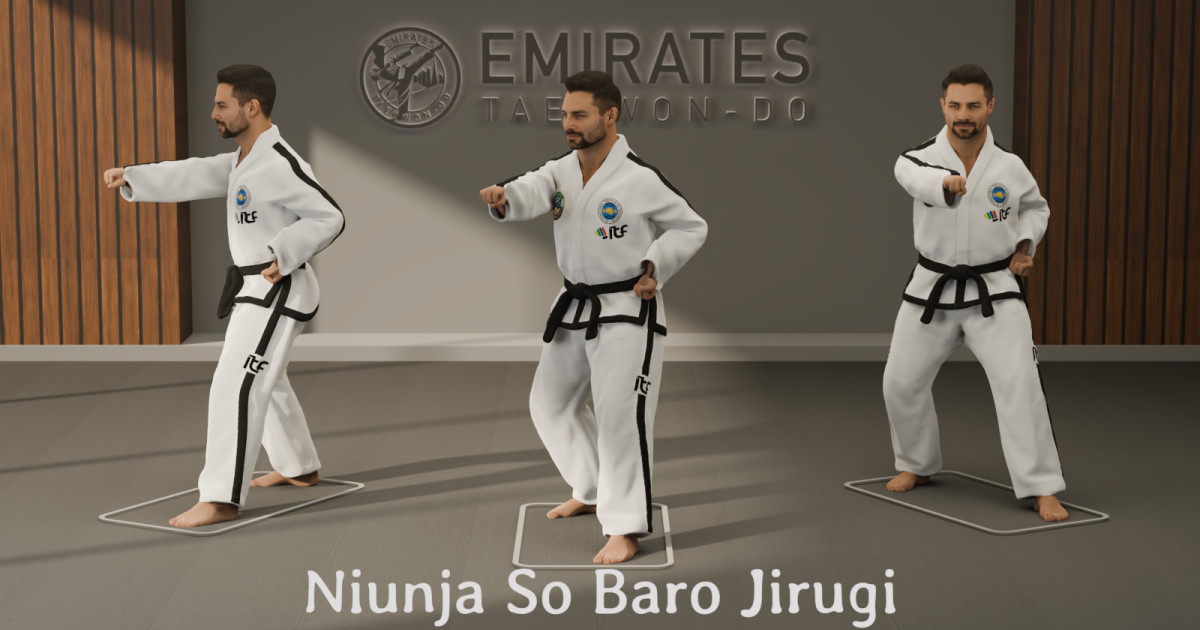
Technical purpose
L-Stance Obverse Middle Punch, called Niunja So Baro Jirugi in Korean terminology, is an ITF Taekwon-Do punching technique performed from L-Stance. The punch is delivered from the same side as the leg which is fully bent.
In L-Stance, the rear leg carries most of the body weight and is the fully bent leg. Therefore, an obverse punch is delivered with the fist on the same side as the rear leg. The technique must keep the body in correct half-facing posture so the stance remains strong and the attacking tool can reach the target.
Key principle
正面击从完全弯曲的腿同侧发出,同时身体保持半面对,拳头与肩部形成三角形。
Technique identity
| 项目 | 技术参考 |
|---|---|
| 技术名称 | L-姿势正面中段拳 |
| 韩语术语 | Niunja So Baro Jirugi |
| 短技术名称 | Baro Jirugi |
| 技术家族 | 拳击技术,或 Jirugi |
| 姿势 | L-姿势,或 Niunja Sogi |
| 拳类型 | 正面拳 |
| 目标层级 | 中段 |
| 身体朝向 | 在冲击时半面对着 |
L-stance base
| 姿势要点 | 正确标准 |
|---|---|
| 长度 | 约1.5个肩宽 |
| 长度测量点 | 从后脚的脚剑到前脚的脚趾 |
| 脚角 | 两只脚的脚趾大约指向15度内侧 |
| 重量分配 | 约70%在后腿,30%在前腿 |
| 后腿 | 完全弯曲并承载大部分身体重量 |
| 前腿 | 适度弯曲并保持轻松 |
| 面对 | 攻击和防御时始终保持半面对 |
Obverse punch rule
| Point | Correct standard |
|---|---|
| Obverse definition | The punch is delivered from the same side as the leg which is fully bent. |
| In right L-Stance | The right leg is fully bent, so the right fist delivers the obverse punch. |
| In left L-Stance | The left leg is fully bent, so the left fist delivers the obverse punch. |
| Body posture | Maintain correct half-facing posture at the moment of impact. |
| Fist line | Keep the punching fist in a line that runs parallel with the other foot at the moment of impact. |
| Structure | The fist forms a triangle with the shoulders. |
如何执行该技术
从正确的L-stance开始。姿势应为后重心、紧凑和半面朝向。后腿承载约70%的体重,而前腿承载约30%。在出拳时,姿势不得转为完全面对的姿势。
从与完全弯曲的腿同侧出拳。在右侧L-stance中,右腿弯曲,右拳出拳。在左侧L-stance中,左腿弯曲,左拳出拳。这种同侧关系使得该技术成为反向出拳。
在冲击的瞬间,拳头应保持与另一只脚平行的线。身体保持半面朝向,从上方看,拳头与肩部形成一个三角形结构。这个三角形结构将出拳与身体连接在一起,防止手臂孤立。
半面姿势
在Niunja So Baro Jirugi中,正确的半面姿势是至关重要的。身体在冲击时不应完全面对。如果身体完全面对,姿势将被破坏,攻击工具可能无法正确到达目标。
半面姿势还可以保护平衡。完全面对的身体更容易失去平衡,尤其是当对手控制或重新引导攻击手臂时。姿势应保持狭窄、后重,并与拳头保持结构连接。
纠正方法很简单:保持L-Stance完整,保持肩部半面朝向,并允许拳头通过正确的线路达到中部目标,而不是完全向前转动胸部。
应用说明
百科全书序列展示了在用手掌进行铲击动作后使用的拳击。对手在拳击发出之前可能会受到干扰或失去平衡。这显示了保持正确的L-stance的重要性:该姿势必须同时允许控制和攻击。
如果身体完全面对或姿势崩溃,攻击可能变得不可能。拳击依赖于姿势、半面对身体线和出拳拳头之间的关系。
Reference checklist
| 检查 | 正确标准 |
|---|---|
| 技术 | L-stance obverse middle punch (Niunja So Baro Jirugi) |
| 技术家族 | 打击技术,或Jirugi |
| 站位 | L-stance,或Niunja Sogi |
| 拳击类型 | 正面拳 |
| 目标层次 | 中段 |
| 出拳侧 | 与完全弯曲的腿同侧 |
| 面向 | 在冲击时半面向 |
| 拳线 | 与另一只脚平行 |
| 俯视结构 | 拳头与肩膀形成三角形 |
| 避免的错误 | 不要完全面对或打破站位 |
Common technical errors
一个常见的错误是在冲击时身体完全转向。这会破坏L-stance的结构,并可能导致攻击工具无法正确到达目标。
另一个错误是失去平衡,因为身体变得过于方正。完全面对的姿势使身体更容易失去平衡。L-stance必须保持半面朝向和后重心。
学生们还常常从错误的一侧出拳。在正面拳中,拳头必须来自与完全弯曲的腿同一侧。如果拳头来自对侧,那就是反向拳,而不是Baro Jirugi。
另一个常见的错误是让拳头偏离正确的线路。拳头应该保持在与另一只脚平行的线路上,并且在冲击时应该与肩膀形成一个三角形。
最后一个错误是将拳击与站姿分开。拳头、肩膀、臀部和L-stance必须一起工作。如果站姿崩溃,拳击将失去延伸和结构。