
Technical purpose
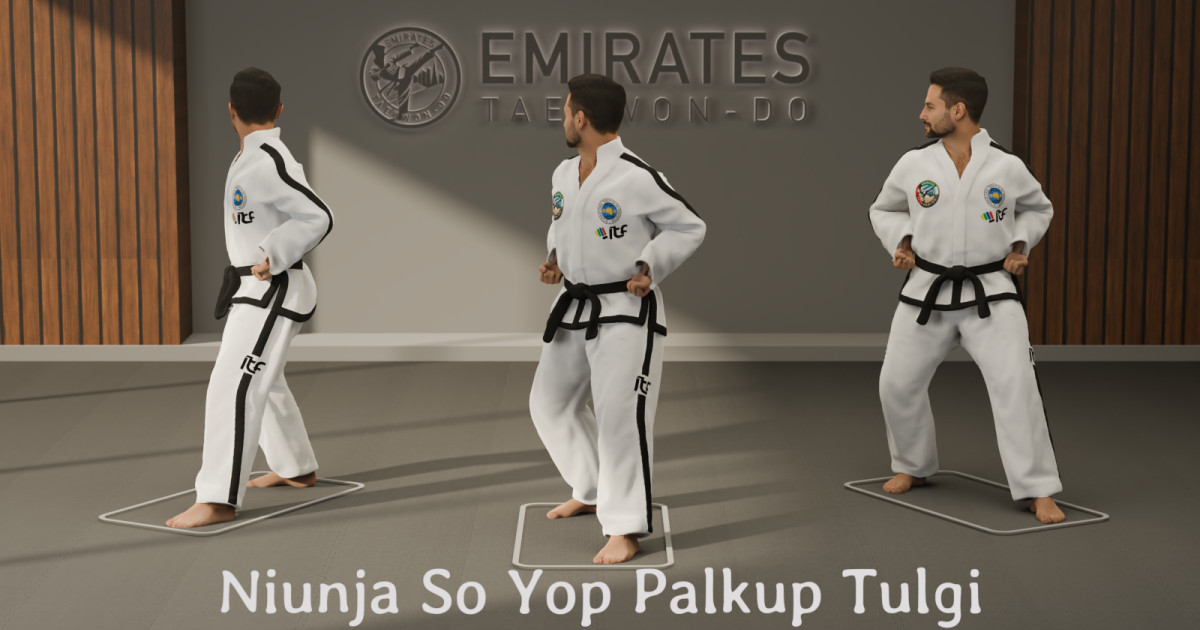
L-Stance Side Elbow Thrust, called Niunja So Yop Palkup Tulgi in Korean terminology, is an ITF Taekwon-Do thrusting technique performed from L-Stance using the side elbow, or Yop Palkup, as the attacking tool.
Side Thrust, or Yop Tulgi, is defined by the body becoming half facing or side facing the target at the moment of impact. In the L-Stance version, the body and shoulders remain half facing, because L-Stance is a half-facing stance.
This article focuses on the single side elbow version. According to the encyclopedia reference, single side elbow is executed from L-Stance, Rear Foot Stance, or Fixed Stance, and is normally performed in a sliding motion.
关键原则
侧肘击是从半面对的L形站立发出的,通常采用滑动动作,击打时肘部稍微抬起,后拳朝下。
Technique identity
| Item | Technical reference |
|---|---|
| Technique name | L-Stance Side Elbow Thrust |
| Korean terminology | Niunja So Yop Palkup Tulgi |
| Short technique name | Yop Palkup Tulgi |
| Technique family | Thrusting technique, or Tulgi |
| Thrust type | Side thrust, or Yop Tulgi |
| Stance | L-Stance, or Niunja Sogi |
| Attacking tool | Side elbow, or Yop Palkup |
| Version | Single side elbow, or Wae Yop Palkup |
| Body facing | Half facing at the moment of impact |
L-stance base
| Stance point | Correct standard |
|---|---|
| Length | Approximately 1.5 shoulder widths |
| Length measuring point | From the footsword of the rear foot to the toes of the front foot |
| Foot angle | Toes of both feet point about 15 degrees inward |
| Weight distribution | About 70% on the rear leg and 30% on the front leg |
| Rear leg | Bent and carrying most of the body weight |
| Front leg | Bent proportionally and kept lighter |
| Facing | Half facing |
侧击和侧肘的规则
| 规则 | 技术要求 |
|---|---|
| 侧击定义 | 如果身体在撞击瞬间变为半面朝向或侧面朝向目标,则称为侧击。 |
| 侧击的主要工具 | 平指尖和侧肘在此技术中发挥主要作用。 |
| 其他常用工具 | 食指和双侧肘也常被使用。 |
| 单侧肘的站位 | L型站位、后脚站位和固定站位。 |
| 双侧肘的站位 | X型站位、平行站位、近身站位、坐姿站位、行走站位和单腿站位。 |
| 动作 | 单侧肘通常采用滑动动作进行。 |
Targets and final position
| Check | Correct standard |
|---|---|
| Main targets | 人中和太阳神经丛 |
| Secondary targets | 浮肋和胸部 |
| Back fist | 在冲击瞬间向下 |
| Thrusting elbow | 在冲击瞬间稍微抬起 |
| Body line | 在L-stance版本中半面向 |
| Impact quality | 紧凑、直接,并由姿势和滑动动作支撑 |
如何执行该技术
从正确的L姿势开始。姿势应该保持狭窄、后重心,并且半面向。后腿承载约70%的体重,而前腿承载约30%。在推击过程中,不要让姿势转变为走姿或完全面向目标。
侧肘以紧凑的侧推动作朝目标发力。该技术通常以滑动动作执行,因此身体应作为一个整体移动,而不是让肘部与姿势脱节。
在撞击的瞬间,保持后拳朝下,并保持推击肘部稍微抬起。肘部不应指向后侧。肘部的方向必须与目标线一致。
主要目标是人中和太阳神经丛。浮肋和胸部也可以作为次要目标。由于肘部是近距离工具,该技术应紧凑、可控,并由L姿势结构支撑。
半面肩膀
在L-stance版本中,肩膀在冲击的瞬间应该保持半面朝向。这符合侧推的定义,并保持Niunja Sogi的防御结构。
半面肩膀线不应仅通过扭动上半身来形成。站姿、臀部、肩膀和肘部必须协同工作。如果肩膀完全朝向,肘部的推击就会失去侧推的结构,身体会变得更加暴露。
纠正方法很简单:保持L-stance后重心,保持肩膀半面朝向,控制滑动,让侧肘到达目标,而不必要地打开身体。
Back fist and elbow position
反手拳在冲击时必须面朝下。这是侧肘动作的具体技术要求。拳头的位置有助于保持肘部和前臂的组织,防止技术变成松散的身体动作。
冲击肘部应稍微抬起。它不应低于目标线,也不应指向后方。如果肘部指向侧后方,攻击工具将无法有效到达目标。
相对的手掌不应以不正确的方式靠近前拳,导致肘部向后偏转。支撑手的关系必须支持冲击,而不是扭曲肘部线。
参考检查表
| 检查 | 正确标准 |
|---|---|
| 技术 | L-姿势侧肘击 (Niunja So Yop Palkup Tulgi) |
| 技术类别 | 击打技术,或称Tulgi |
| 站姿 | L-姿势,或称Niunja Sogi |
| 工具 | 侧肘,或称Yop Palkup |
| 版本 | 单侧肘,或称Wae Yop Palkup |
| 主要目标 | 人中和太阳神经丛 |
| 次要目标 | 浮肋和胸部 |
| 动作 | 通常以滑动动作执行 |
| 身体朝向 | 撞击时半面向 |
| 反拳 | 撞击时面朝下 |
| 肘部击打 | 撞击时稍微抬起 |
Common technical errors
一个常见的错误是将发力的肘部指向侧后方。当这种情况发生时,肘部无法正确地到达目标。百科全书警告将这个错误与错误地将对侧手掌带到前拳联系在一起。
另一个错误是失去半面对身体线。由于该技术是从L-stance执行,并且属于侧推系列,因此在冲击时身体和肩膀应保持半面对。
学生们通常也会使动作过大。侧肘推是近距离技术。肘部应紧凑、直接,并通过滑动动作支撑,而不是松散地摆动。
另一个常见错误是忘记后拳的位置。后拳在冲击时应朝下。如果拳头转动不正确,肘部线和身体结构通常会受到影响。
最后一个错误是将肘部与姿势断开。L-stance应保持后重心和稳定。肘部、肩膀、臀部和滑动动作应在冲击时一起到达。