The final confidence stage
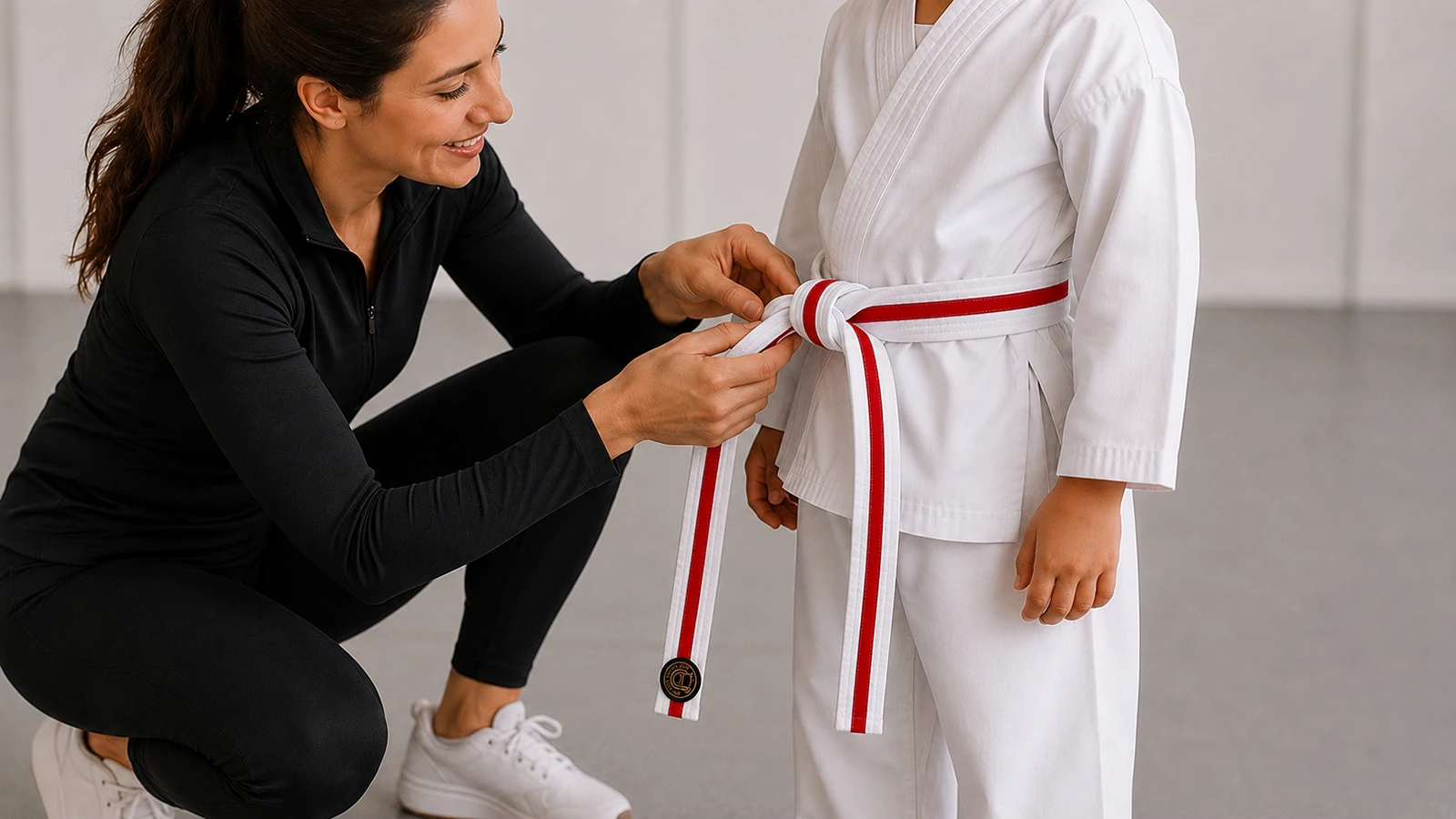
This stage is the final level of the Emirates Taekwon-Do Early Confidence Rank System for children aged 3 to 6. Students progressing from White Belt with Red Line toward the traditional White-Yellow Belt are now preparing to transition into the standard ITF colour belt progression.
Unlike the previous stages, this level focuses on combining all the movements, skills, and theory learned throughout the entire beginner confidence program. Children are expected to demonstrate stronger focus, better memory, improved coordination, and greater confidence during class and grading situations.
The purpose of this final stage is not to create perfect technique at a very young age. The purpose is to ensure that the child enters the traditional ITF colour belt system with a strong emotional, physical, and technical foundation.
Technical requirements
For promotion to the traditional White-Yellow Belt, students must review and demonstrate all the movements learned throughout the previous confidence ranks.
- Gunnun So Kaunde Ap Jirugi
- Gunnun So Palmok Najunde Makgi
- Gunnun So Sonkal Najunde Makgi
- Gunnun So An Palmok Kaunde Makgi
- Front Snapping Kick - Ap Chagi
- Turning Kick - Dollyo Chagi
- Side Piercing Kick - Yop Chagi
- Flying Front Snapping Kick
- Flying Turning Kick
- Flying Side Piercing Kick
- Saju Jirugi
- Saju Makgi
Students are not expected to perform these techniques with adult-level precision. Instead, the examiner should see confidence, coordination, focus, effort, and the ability to follow instructions while combining the movements learned throughout the beginner stages.
Development focus
The main development focus for this final confidence stage is helping children combine all the abilities developed during the earlier beginner ranks.
- Combining all learned skills — using balance, coordination, memory, and movement together.
- Confidence during grading — feeling comfortable performing in front of instructors and parents.
- Leadership and teamwork — setting a positive example for younger or newer students.
- Discipline and focus — listening carefully and staying attentive during longer activities.
- Readiness for the traditional ITF colour belt system — preparing emotionally and technically for the next stage.
At this level, children often show major improvements in confidence, classroom behaviour, focus, coordination, and emotional resilience compared to when they first started training.
Theory review
Students should review all the beginner theory learned throughout the confidence ranks. The goal is not advanced memorisation, but familiarity and confidence with the important beginner concepts of Taekwon-Do.
- Meaning of Taekwon-Do
- Founder of Taekwon-Do — General Choi Hong Hi
- Korean numbers 1–10
- The Five Tenets of Taekwon-Do
- Dojang — place for practice
- Dobok — uniform
- Ti — belt
- Instructor titles
Students should also continue reviewing Courtesy, Integrity, Perseverance, Self-Control, and Indomitable Spirit in simple and practical ways appropriate for their age.
How parents can help
This final confidence stage is an excellent opportunity for parents to celebrate how much their child has grown since starting Taekwon-Do. Many children who began shy, distracted, nervous, or hesitant are now more confident, focused, disciplined, and willing to participate positively in class.
Parents can support this stage by reviewing movements gently at home, encouraging calm and positive practice, and helping children remember the theory they have learned. Asking children to demonstrate their favourite kick, count in Korean, or explain one of the tenets helps reinforce confidence and pride in their progress.
Most importantly, parents should continue praising effort, participation, courage, discipline, and respectful behaviour rather than only technical performance. Emotional confidence and positive habits are some of the most valuable outcomes of martial arts training at this age.
Ready for the traditional system
A student becomes ready for the traditional White-Yellow Belt when they can demonstrate the complete beginner foundation with confidence, focus, participation, and positive behaviour appropriate for their age.
This final stage prepares children to transition into the standard ITF colour belt progression with stronger coordination, better listening skills, improved discipline, and greater emotional confidence. They now have a broader understanding of movement, direction, teamwork, balance, and Taekwon-Do terminology than most children beginning the traditional system directly.
The Emirates Taekwon-Do Early Confidence Rank System is designed to create positive achievement experiences during the most important developmental years. Through smaller milestones, children build the confidence, discipline, leadership, and emotional resilience needed for long-term success both inside and outside the Dojang.