
Technical purpose
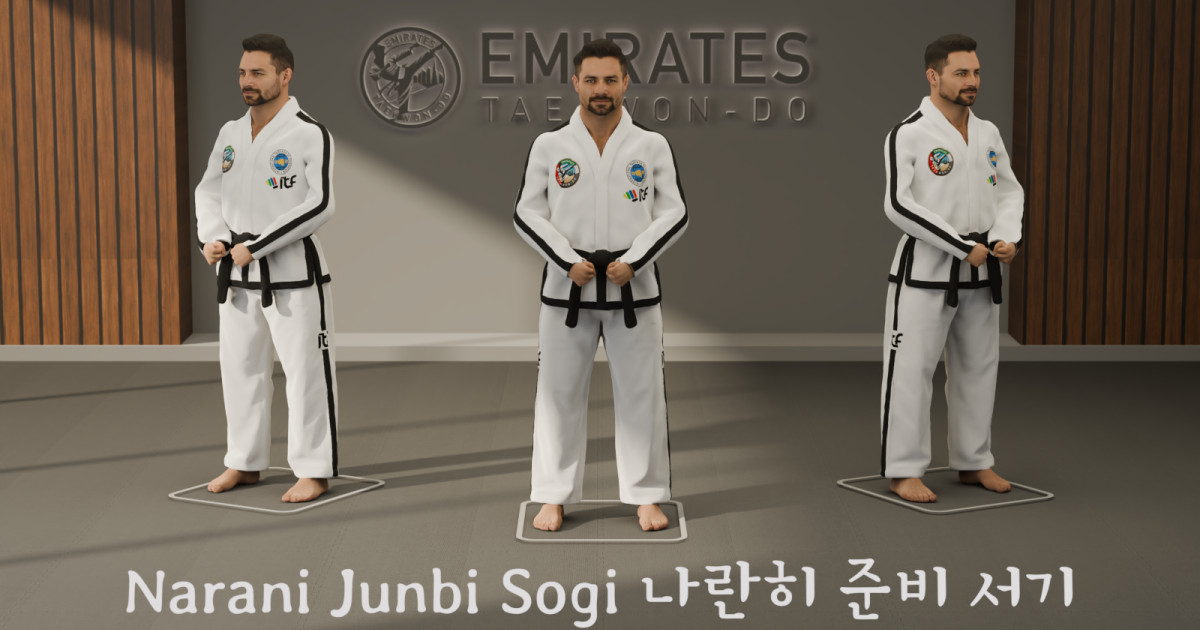
Parallel Ready Stance, called Narani Junbi Sogi in Korean terminology, is a standard ready position used in ITF Taekwon-Do fundamental and pattern exercises. A ready stance is not a direct part of an action. It positions the student before motion begins and allows time for concentration of spirit.
Narani Junbi Sogi is a Parallel Stance with both fists brought naturally over the abdomen. The stance should look calm, centered, and prepared. It is not a fighting guard, a relaxed casual posture, or a technique by itself.
Key principle
Parallel Ready Stance prepares the body and mind before movement, with the feet parallel and the fists held naturally over the abdomen.
Technical structure
| Reference point | Correct standard |
|---|---|
| Stance name | Parallel Ready Stance (Narani Junbi Sogi) |
| Base stance | Parallel Stance (Narani Sogi) |
| Width | 1 shoulder width |
| Width measuring point | Measured from footsword to footsword |
| Length | No length |
| Feet | Parallel, even, and pointing straight forward |
| Weight distribution | 50% on the left leg and 50% on the right leg |
| Legs | Straight and balanced |
Hand and arm position
| Check | Correct standard |
|---|---|
| Fist position | Both fists are brought naturally over the abdomen |
| Distance between fists | About 5 cm |
| Distance from abdomen | About 7 cm away from the abdomen |
| Elbow to floating ribs | About 10 cm |
| Upper arms | Held forward about 30 degrees |
| Forearms | Bent upward about 40 degrees |
| Elbows | Not extended to the side more than necessary |
| Shoulders | Relaxed, not tensed |
How to perform the stance
Stand in Parallel Stance with the feet one shoulder width apart. The feet are measured from footsword to footsword, remain parallel, and point straight forward. The stance has no length because neither foot is advanced.
Bring both fists naturally over the abdomen. The fists should be about 5 cm apart and about 7 cm away from the abdomen. The elbows should remain about 10 cm from the floating ribs. The arms should not be forced outward.
Hold the upper arms forward about 30 degrees while bending the forearms upward about 40 degrees. The shoulders should remain relaxed. A correct Narani Junbi Sogi should show readiness and concentration without stiffness.
Use in training
| Use | Explanation |
|---|---|
| Fundamental exercises | Used as a prepared starting position before motion begins |
| Pattern exercises | Used as a formal ready stance before performing Tul |
| Action status | Not a direct part of the action itself |
| Mental purpose | Allows time for concentration of spirit |
Common technical errors
A common error is making the stance too wide. Parallel Ready Stance should use the Parallel Stance base, with the feet one shoulder width apart from footsword to footsword. If the feet are wider than necessary, the posture becomes weaker and less clean.
Another error is allowing the toes to turn outward. The toes should point straight forward, and the feet should remain parallel. The stance should not look like a casual relaxed standing position.
Students also commonly tense the shoulders. The shoulders should remain relaxed while the fists are held naturally over the abdomen. Tensed shoulders make the ready stance look forced and interfere with calm preparation.
Another error is pushing the elbows too far to the side. The elbows should not extend outward more than necessary. Keep about 10 cm between the elbows and the floating ribs, with the upper arms forward about 30 degrees and the forearms bent upward about 40 degrees.