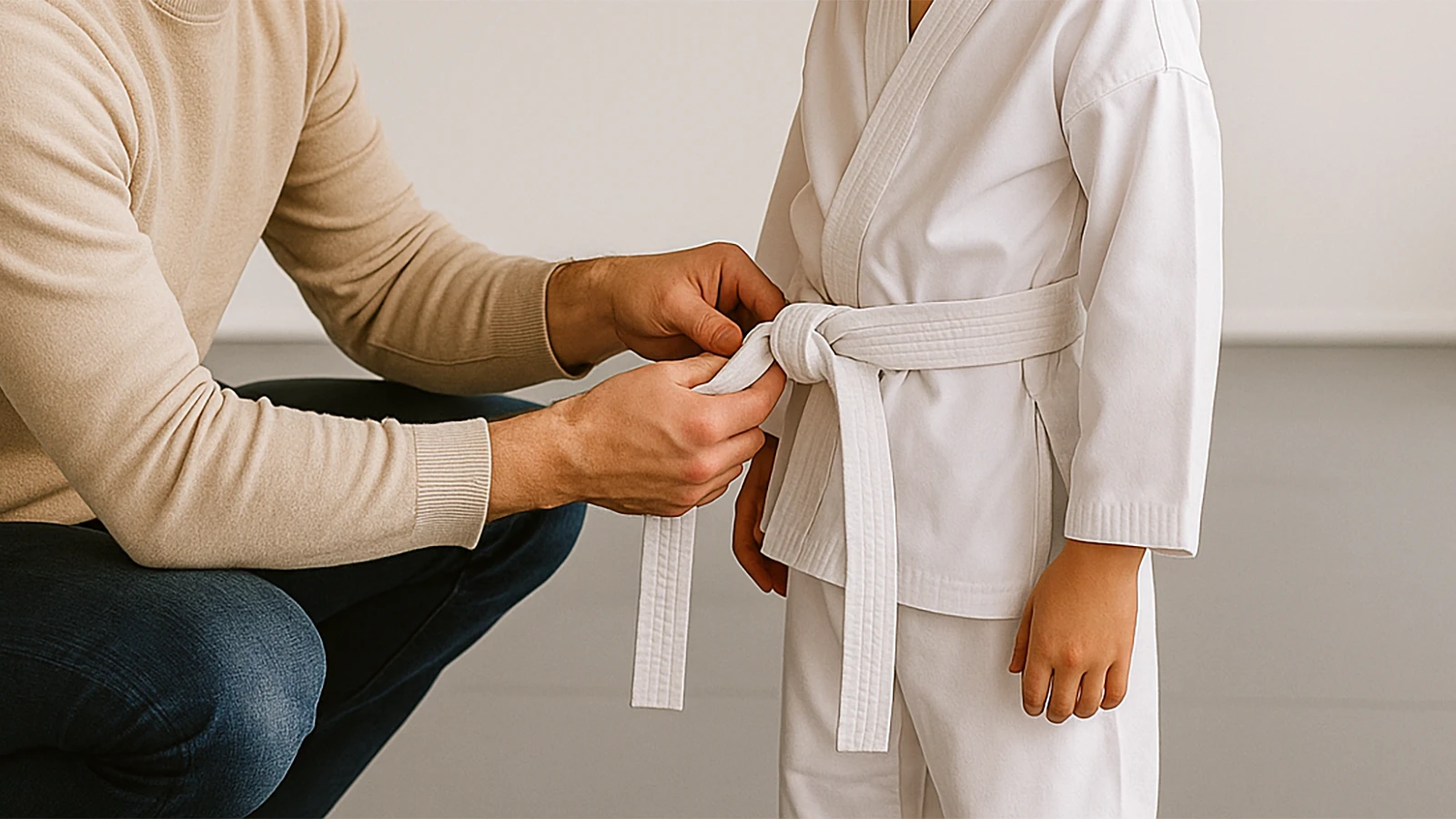
The early confidence system
At Emirates Taekwon-Do, children aged 3 to 6 follow a special Early Confidence Rank System designed specifically for younger students. Instead of moving directly through the traditional colour belt system, the beginner White Belt program is divided into smaller and more achievable stages.
The purpose of this structure is not only technical development. At this age, children are still developing balance, coordination, listening skills, emotional regulation, confidence, teamwork, and body awareness. Smaller milestones allow children to experience success more frequently while building motivation and positive habits.
These intermediate line belts gradually prepare children for the traditional ITF White-Yellow Belt exam while creating a more positive and age-appropriate learning experience. The first stage is the progression from White Belt to White Belt with Yellow Line.

Confidence system for early childhood development
Technical requirements
For promotion to White Belt with Yellow Line, students begin learning the first fundamental movements of Taekwon-Do. These movements introduce posture, balance, direction, coordination, and body control.
- Walking Stance Middle Front Punch — Gunnun So Kaunde Ap Jirugi
- Going forward and backward
- Front Snapping Kick — Ap Chagi
The walking stance middle punch teaches children how to move their upper and lower body together while maintaining balance. Moving forward and backward develops coordination, direction awareness, and listening skills. Front snapping kick introduces basic kicking mechanics while helping children discover how to control their legs, balance, and movement.
At this age, perfect technique is not the priority. The main goal is helping children become comfortable using their bodies with confidence and discipline.
Development focus
The most important part of the White Belt stage is not the kick or punch itself. The real objective is helping children build important life skills through structured training and positive repetition.
- Listening skills — learning to stop, watch, and follow instructions.
- Following instructions — responding correctly to simple commands and routines.
- Confidence in movement — feeling comfortable trying new actions without fear.
- Basic body coordination — learning balance, timing, and movement control.
- Classroom participation — joining activities positively and interacting with others respectfully.
Many young children begin classes shy, distracted, hesitant, or unsure of themselves. Through repetition, encouragement, games, and structured activities, they gradually become more confident and comfortable participating in front of others.
Theory and learning
Even at beginner level, children begin learning small pieces of Taekwon-Do theory in a simple and age-appropriate way. The goal is not memorisation under pressure, but gradual familiarity with the language and meaning of Taekwon-Do.
Students are introduced to the meaning of the word Taekwon-Do:
- Tae — to kick or smash with the foot.
- Kwon — to punch or destroy with the hand or fist.
- Do — an art or way.
Students also begin learning that the founder of Taekwon-Do is General Choi Hong Hi. In addition, children start practising the first Korean numbers:
- Hana — 1
- Dul — 2
- Set — 3
These small learning steps help children become familiar with the culture and structure of Taekwon-Do in a fun and manageable way.
How parents can help
Parental involvement is one of the most important factors in a young child progress. Children improve faster when parents encourage consistency, celebrate effort, and reinforce positive behaviour at home.
Parents can help by encouraging children to practise simple movements safely, praising effort instead of perfection, and reviewing small pieces of terminology together. Asking your child to count Hana, Dul, Set or show their front snapping kick creates positive reinforcement and helps build confidence.
At this stage, success should not be measured only by technical performance. Improvements in listening, focus, confidence, participation, teamwork, and emotional control are equally important achievements. Every small milestone helps build the foundation for future growth inside and outside the Dojang.
The next stage
Once the student is comfortable with the White Belt requirements and demonstrates the expected behaviour, confidence, and participation, they become ready for promotion to White Belt with Yellow Line.
The next stage introduces additional coordination and kicking skills while continuing to develop confidence, leadership, teamwork, and discipline. Each intermediate rank gradually expands the child understanding of Taekwon-Do while keeping the goals achievable and motivating for young students.
The purpose of the Early Confidence Rank System is to create positive progress experiences during the most important developmental years. Through small steps, children build the physical abilities, emotional confidence, and disciplined habits that will prepare them for the traditional ITF colour belt system later in their journey.