Definition and structure
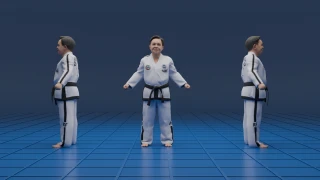
Ready stance, known as Narani Junbi Sogi, is derived directly from parallel stance. The feet are placed in parallel stance, one shoulder width apart measured from the outer edge of each foot, with equal weight distribution on both legs.
The stance is symmetrical, meaning there is no left or right version. The torso may be full facing or side facing depending on the exercise context, but in most formal applications it is performed full facing.
Narani Junbi Sogi represents mental and physical preparedness. It is not a casual standing posture. According to the technical principles outlined in the Encyclopedia of Taekwon-Do by Gen. Choi Hong Hi, the ready stance must demonstrate discipline, balance, and controlled alignment.
Hand and fist positioning
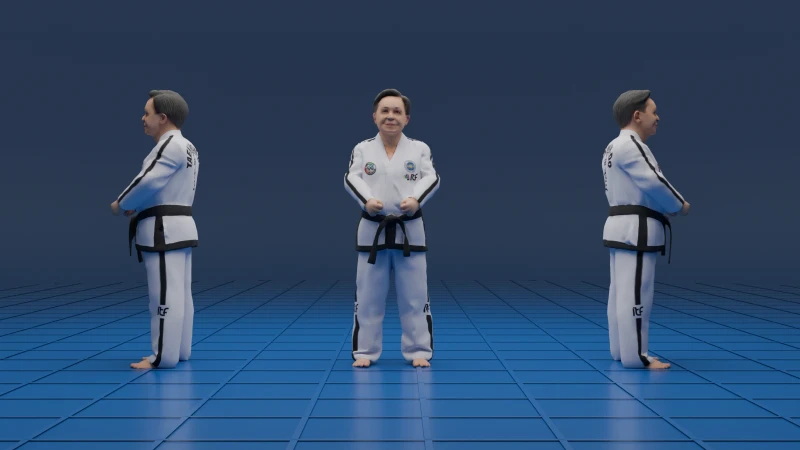
In ready stance, both fists are brought naturally over the abdomen. The fists are positioned approximately 7 centimeters away from the abdomen and approximately 5 centimeters apart from each other.
The wrists remain straight and relaxed without excessive tension. The fists should not press against the body nor float too far forward. The position must appear natural and balanced.
Correct hand positioning ensures readiness for immediate movement while maintaining composure. Excessive elevation of the fists or pulling them too close to the body disrupts the intended structure of the stance.
Elbow and arm alignment
The distance between the elbows and the floating ribs should be approximately 10 centimeters. The elbows must not extend outward more than necessary. Overextending the elbows to the sides creates unnecessary tension and distorts alignment.
The upper arms are held forward at approximately 30 degrees from the torso. The forearms are bent upward at approximately 40 degrees. These specific angles create a structurally efficient and visually disciplined posture.
The shoulders remain relaxed and level. Lifting the shoulders or tightening the upper back reduces fluidity and interferes with rapid transition into movement.
Posture and balance
The spine remains upright, the head level, and the chin slightly tucked. Weight distribution remains equal, expressed as 50 percent on each leg.
Ready stance should feel stable yet prepared. The body is grounded through both feet, with structural engagement but without rigidity. The legs remain straight without locking the joints.
Adult practitioners must ensure that balance is centered. Leaning forward, backward, or to one side undermines the symmetrical nature of the stance and diminishes readiness.
Functional purpose
Ready stance is used at the beginning and end of patterns, before executing fundamental exercises, and during instructor commands such as Ready. It signals attentiveness and mental focus.
From this position, techniques can be initiated efficiently in any direction. The spacing of the fists and controlled arm angles allow immediate reaction without adjustment.
In adult training, ready stance reinforces discipline and structural awareness. It serves as a reset position between techniques and reflects the practitioner’s respect for the art and instructor.
Common technical errors
A frequent error is placing the fists too high or too low relative to the abdomen. Another common mistake is allowing the elbows to flare excessively outward, creating tension and disrupting alignment.
Bringing the fists too close together or too far apart alters the intended spacing and reduces efficiency. Likewise, collapsing the forearms or exaggerating the arm angles compromises structural clarity.
Adult practitioners should periodically verify the distances and angles to maintain consistency. Precision in ready stance reflects overall technical maturity and attention to detail.