
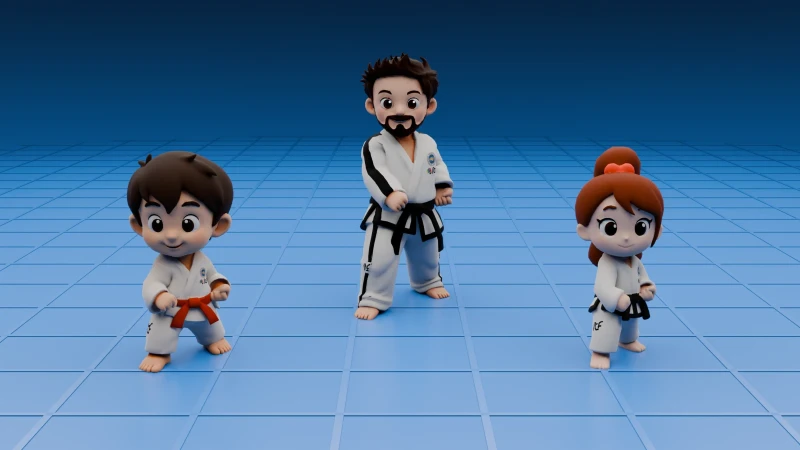
Forearm Low Block - Palmok Najunde Makgi
When your child practices the forearm low block in walking stance, begin by checking the stance. One foot should be forward, the knees slightly bent, and the body upright and stable without leaning. The shoulders must be half facing, meaning the body is slightly turned, not fully square and not sideways. Next, observe the blocking arm: it should move in a smooth, controlled arc downward, using the forearm (palmok) to defend against a low attack. The block should finish at the correct low level, near the upper thigh, with the arm slightly bent to show control rather than force. At the same time, the opposite hand must pull back firmly to the hip, which helps your child learn coordination and balance. Throughout the movement, the stance should remain steady, with weight evenly distributed and the head level. Parents can remind their child to stay relaxed, breathe naturally, and keep good posture. By checking the stance, shoulder position, arm path, and hand retraction, parents can help their child perform this block safely, correctly, and with confidence.
Click to load the interactive view.
Walking Stance (Kids)
The walking stance is a fundamental Taekwon-Do position that teaches students balance, stability, and correct body alignment. By practicing proper foot placement, weight distribution, and posture, students develop a strong foundation for powerful and controlled techniques.
Discover this related learning.
Learn More 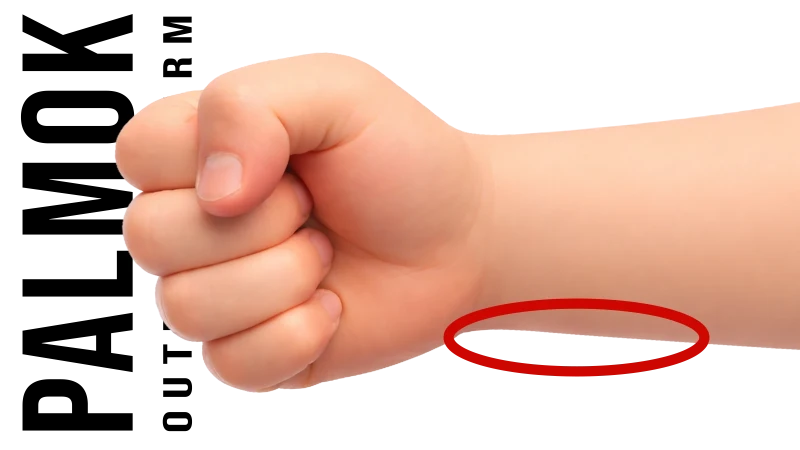
Practice At Home
To practice at home, parents should give clear and simple instructions, just like in class. Begin by saying “Junbi”, which means “ready.” The child should adopt a ready position with the feet parallel and one shoulder width apart, standing upright, and the fists held in front of the belt, slightly apart, showing readiness and control. Next, the parent counts “hana”, then waits patiently until the child completes one correct movement. After the technique is finished, the parent counts “dul”, waits again, and then “set”, allowing the child to perform one movement per count. Once the child has completed three steps forward, repeat the same process moving backward, again counting “hana, dul, set” and waiting for each movement to be completed. Practice this sequence a few times, calmly correcting posture, balance, and control using the instructions learned above if needed. When the child is ready for the next stage, instead of counting each movement, the parent gives the command “Si-jak” (the Taekwon-Do command for “begin”). The child should then perform three movements forward and three movements backward independently. At this stage, parents should focus on steady pace, making sure the child breathes correctly and includes a small pause between movements, encouraging calm control rather than rushing.
Frequently Asked Questions
Frequently Asked Questions
- What is the purpose of the forearm low block? The forearm low block (Palmok Najunde Makgi) is used to defend against low attacks while promoting balance and coordination.
- How can I help my child practice at home? Encourage your child to practice the forearm low block by counting movements and ensuring proper posture and breathing.