
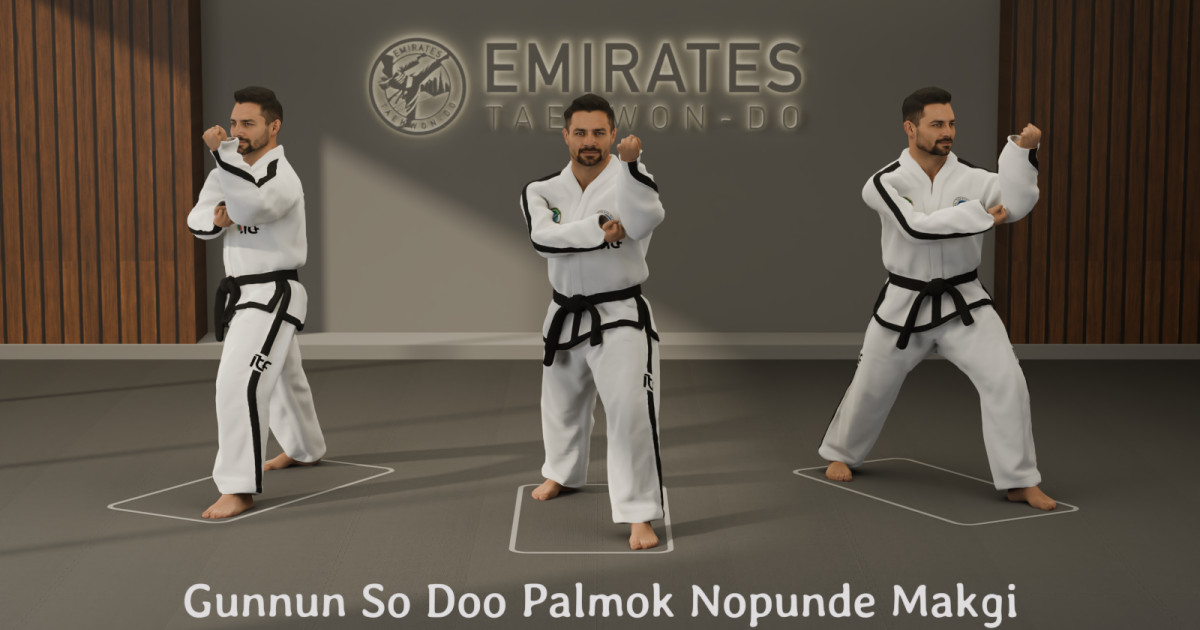
Technique identity
| Item | Technical reference |
|---|---|
| Technique name | Walking Stance Double Forearm High Block |
| Korean terminology | Gunnun So Doo Palmok Nopunde Makgi |
| Short technique name | Doo Palmok Nopunde Makgi |
| Technique family | Blocking technique, or Makgi |
| Block type | Double Forearm Block, or Doo Palmok Makgi |
| Stance | Walking Stance, or Gunnun Sogi |
| Target level | High section, or Nopunde |
| Working surface | Inner forearm |
| Body facing | Half facing at the moment of the block |
چلنے کی حالت کی بنیاد
| حالت کا نقطہ | ضرورت |
|---|---|
| لمبائی | 1.5 کندھے کی چوڑائی، بڑے پیر سے بڑے پیر تک ناپی جاتی ہے |
| چوڑائی | 1 کندھے کی چوڑائی، قدموں کے درمیان کے مرکز سے ناپی جاتی ہے |
| وزن کی تقسیم | پیش قدم پر 50% اور پیچھے قدم پر 50% |
| پیش قدم | سیدھا آگے کی طرف اشارہ کرتا ہے |
| پیچھے قدم | 25 ڈگری باہر کی طرف مڑتا ہے |
| پیش قدم کی گھٹنے | ایسی حالت میں موڑا جائے کہ گھٹنے کا پٹکا ایڑی کے ساتھ عمودی لائن میں گرتا ہے |
| اس تکنیک کے لیے رخ | بلاک کے لمحے میں آدھا رخ جسم اور کندھے |
اہم تکنیکی قواعد
| قاعدہ | تکنیکی ضرورت |
|---|---|
| بلاک کی طاقت | دو forearm بلاک بلاکنگ کی سب سے طاقتور شکلوں میں سے ایک ہے۔ |
| تکتیکی فائدہ | ایک forearm جلدی سے دوسرے بلاک میں منتقل ہو سکتا ہے جبکہ دوسرا forearm بلاکنگ جاری رکھتا ہے۔ |
| عام حالتیں | زیادہ تر چلتی ہوئی حالت یا X-Stance میں انجام دی جاتی ہیں۔ |
| موقع پر حالتیں | کبھی کبھار L-Stance یا Rear Foot Stance میں بھی انجام دی جا سکتی ہیں۔ |
| Forearm کی سطح | صرف اندرونی forearm کا استعمال کیا جاتا ہے۔ |
| جسم کا رخ | جسم کو ہدف کی طرف نصف رخ رکھیں۔ |
| ہاتھ کا تعلق | بلاک کے لمحے پر چھوٹے انگلی کے دوسرے جوڑ کو کہنی کی طرف لائیں۔ |
| مثلثی ساخت | بلاکنگ ہاتھ کندھوں کے ساتھ ایک مثلث بناتا ہے۔ |
High-section purpose
The target level is high section, or Nopunde. The block is used to protect against attacks directed toward the upper line, including targets such as the philtrum, chin, face, neck, or points above, depending on the specific application.
Because this is a double forearm block, the technique is not judged only by the front hand. The supporting forearm and the blocking forearm must work together. The final structure should show strong high-line protection while still keeping the body half facing.
The block should not become a simple upward motion. The encyclopedia warning shows that if the block is performed upward instead of with the correct side-blocking action, the target can be missed. The direction and focus must match the intended high-section defence.
سامنے اور پیچھے کے ورژن
| ورژن | چلنے کی حالت حوالہ |
|---|---|
| سامنے کا بلاک | بلاکنگ طرف مکمل مڑنے والی سامنے کی ٹانگ کے اسی طرف کے ساتھ مطابقت رکھتا ہے۔ |
| پیچھے کا بلاک | بلاکنگ طرف مکمل مڑنے والی سامنے کی ٹانگ کے مخالف طرف کے ساتھ مطابقت رکھتا ہے۔ |
| چلنے کی حالت کا قاعدہ | چلنے کی حالت میں سامنے اور پیچھے دونوں دوForearm بلاک کیے جا سکتے ہیں۔ |
| مشترکہ معیار | دونوں ورژن جسم کو نصف سامنا رکھتے ہیں، اندرونی forearm کا استعمال کرتے ہیں، اور کندھوں کے ساتھ مثلث کی ساخت کو برقرار رکھتے ہیں۔ |
بلاک کو کیسے انجام دیں
صحیح چلنے کی حالت سے آغاز کریں۔ یہ حالت 1.5 کندھے کی چوڑائی لمبی اور 1 کندھے کی چوڑائی چوڑی ہونی چاہیے۔ سامنے کا گھٹنا جھکا ہوا ہے، پچھلا پاؤں مضبوط ہے، اور وزن سامنے اور پچھلے دونوں ٹانگوں کے درمیان برابر تقسیم کیا گیا ہے۔
ڈبلForearm کا ڈھانچہ دونوں Forearm کو اونچے حصے کی بلاکنگ کی حالت میں لانے سے تشکیل دیا جاتا ہے۔ صرف اندرونی Forearm کو کام کرنے والی بلاکنگ سطح کے طور پر استعمال کیا جاتا ہے۔ اگر درکار ٹول اندرونی Forearm ہے تو یہ تکنیک بے پرواہ کلائی، مٹھی، یا بیرونی بازو کے رابطے کے ساتھ نہیں کی جانی چاہیے۔
بلاک کے لمحے پر، جسم کو ہدف کی طرف نصف سامنے ہونا چاہیے۔ کندھے بھی اس نصف سامنے کی لائن کی حمایت کرنی چاہیے۔ جسم کو مکمل سامنے نہیں ہونا چاہیے، کیونکہ یہ نچلے پیٹ کو بے نقاب کرتا ہے اور تکنیک کی ساخت کو کمزور کرتا ہے۔
بلاک کے لمحے پر چھوٹے انگلی کے دوسرے جوڑ کو کہنی تک لایا جاتا ہے۔ یہ تعلق ڈبلForearm کے ڈھانچے کی وضاحت کرنے میں مدد کرتا ہے۔ اوپر کے نظر سے، بلاکنگ ہاتھ کندھوں کے ساتھ ایک مثلث بناتا ہے، یہ ظاہر کرتا ہے کہ بلاک جسم سے جڑا ہوا ہے نہ کہ بازوؤں میں الگ۔
Half-facing body and shoulders
نصف رخ کرنا اس تکنیک میں سب سے اہم چیک میں سے ایک ہے۔ جسم کو بلاک کے لمحے میں ہدف کی طرف نصف رخ رکھنا چاہیے۔ اگر جسم مکمل رخ کر لے تو نچلا پیٹ بے نقاب ہو سکتا ہے اور دفاعی ڈھانچہ کمزور ہو جاتا ہے۔
کندھوں کو کمر اور حالت کے ساتھ ہم آہنگ ہونا چاہیے۔ طالب علم کو صرف اوپر والے جسم کو موڑنے کی اجازت نہیں دینی چاہیے جبکہ نچلا جسم علیحدہ رہتا ہے۔ Walking Stance بنیاد فراہم کرتا ہے، کمر رخ طے کرتی ہے، اور کندھے ڈبل فور آرم بلاک کو منظم کرتے ہیں۔
درستگی آسان ہے: Walking Stance کو درست رکھیں، جسم کو سیدھا رکھیں، کندھوں کو نصف رخ رکھیں، اور بازوؤں کو ایک منظم ہائی سیکشن بلاک میں لائیں بغیر کہ جسم مکمل طور پر حریف کی طرف رخ کر جائے۔
سمت اور توجہ
بلاک کو صحیح ہائی سیکشن لائن تک پہنچنا چاہیے۔ اسے بے قابو اوپر کی طرف حرکت میں نہیں دینا چاہیے۔ انسائیکلوپیڈیا کا حوالہ دیتا ہے کہ اوپر کی طرف حرکت نشانے سے چھوٹ سکتی ہے، خاص طور پر جب متوقع رابطہ چہرے کے نکات جیسے کہ ٹھوڑی یا پھلٹروم کی طرف ہو۔
بلاک کے لیے ہپ اور پیٹ کا صحیح استعمال بھی ضروری ہے۔ اگر ہپ اور پیٹ کے پٹھے استعمال نہیں کیے جاتے تو جسم مکمل طور پر سامنے آ سکتا ہے اور نچلے پیٹ کو بے نقاب کر سکتا ہے۔ بلاک کو صرف ہاتھوں کی مدد سے نہیں بلکہ ہم آہنگ جسمانی میکانکس سے سہارا دیا جانا چاہیے۔
ڈبل فور آرم کا ڈھانچہ کمپیکٹ اور عملی رہنا چاہیے۔ فور آرمز ہائی لائن کی حفاظت کرتے ہیں جبکہ جسم آدھے رخ پر رہتا ہے۔ آخری حالت میں دونوں دفاع اور ضرورت پڑنے پر ایک فور آرم کو دوسرے بلاک میں منتقل کرنے کے لیے تیاری دکھانی چاہیے۔
Reference checklist
| Check | Correct standard |
|---|---|
| Technique | Walking Stance Double Forearm High Block (Gunnun So Doo Palmok Nopunde Makgi) |
| Technique family | Blocking technique, or Makgi |
| Block type | Double Forearm Block, or Doo Palmok Makgi |
| Stance | Walking Stance, or Gunnun Sogi |
| Target level | High section, or Nopunde |
| Working surface | Inner forearm only |
| Facing | Half facing at the moment of the block |
| Shoulders | Half facing, not full facing |
| Hand relationship | Second knuckle of the little finger brought to the elbow |
| Structure | Blocking hand forms a triangle with the shoulders |
| Walking Stance options | Obverse and reverse blocks can both be performed |
| Body mechanics | Use the hip and abdomen so the body does not collapse into full facing |
Common technical errors
A common error is performing the block in an upward motion instead of the required side-blocking action. When this happens, the block can miss the target because both fists are drawn from the hip and the technique does not reach the correct line.
Another error is missing the high-section target. The encyclopedia examples warn that the fist may fail to reach the point of the chin or that the back fist may miss the philtrum. The blocking structure must protect the intended high-line target, not pass beside it or stop short of it.
Students also commonly become full facing. This is incorrect for this technique. If the hip and abdomen are not used properly, the body may square up and expose the lower abdomen. The correct finish is half facing.
Another error is using the wrong forearm surface. The reference states that only the inner forearm is used. The student should not replace it with the outer forearm, fist, wrist, or upper arm.
The final error is failing to form the correct double forearm relationship. The second knuckle of the little finger should come to the elbow at the moment of the block, and the blocking hand should form a triangle with the shoulders. Without this structure, the technique loses the strength that makes Doo Palmok Makgi one of the strongest forms of blocking.
Key principle
Double Forearm High Block uses both forearms in a strong half-facing structure, with the blocking hand forming a triangle with the shoulders and the body ready to shift one forearm into another block.
Technical purpose
Walking Stance Double Forearm High Block, called Gunnun So Doo Palmok Nopunde Makgi in Korean terminology, is an ITF Taekwon-Do defensive technique performed from Walking Stance using both forearms. It belongs to the double forearm block family, called Doo Palmok Makgi.
Double Forearm Block is described as one of the strongest forms of blocking. Its main advantage is that one forearm can quickly shift into another block while the other forearm continues to protect the body. This makes the technique structurally strong and tactically useful when the defender must cover more than one line.
This article is a technical reference. It focuses on the Walking Stance base, high-section purpose, inner forearm use, half-facing body position, relationship between the hands, obverse and reverse use, triangle structure, and common technical errors.