
Rank Learnings
White Belt Kids
Taekwon-Do
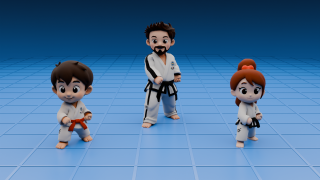
Forearm Low Block Technique for Kids
Explore common questions about the forearm low block technique for kids.
Open learning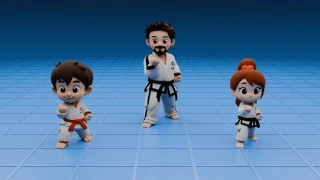
Inner Forearm Middle Block (Kids)
The middle block with the inner forearm in walking stance teaches children how to protect the middle part of the body while maintaining balance and correct posture. This technique helps young students develop coordination, body control, and safe defensive habits through clear and structured Taekwon-Do fundamentals.
Open learning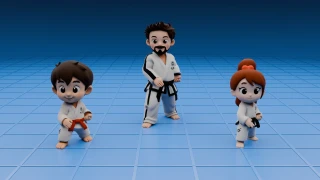
Knife-Hand Low Block (Kids)
The knife-hand low block in walking stance helps children learn how to defend the lower part of the body while improving balance, coordination, and correct posture. This technique teaches young students to use the hand safely and precisely while maintaining a strong and stable stance.
Open learning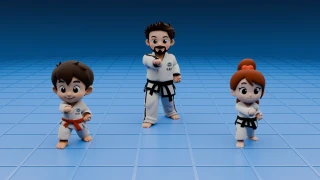
Middle Punch Technique for Kids in ITF Taekwon-Do
The middle punch in walking stance is one of the first techniques children learn in Taekwon-Do.
Open learning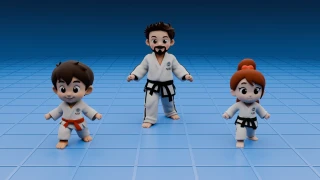
Walking Stance (Kids)
The walking stance is a fundamental Taekwon-Do position that teaches students balance, stability, and correct body alignment. By practicing proper foot placement, weight distribution, and posture, students develop a strong foundation for powerful and controlled techniques.
Open learning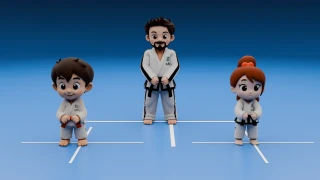
Four Directions Punch (Kids)
Four Direction Punch (Saju Jirugi) is a fundamental exercise taught to children in ITF Taekwon-Do to develop correct walking stance, middle punch execution, coordination, and directional awareness. Practicing punches to the front, back, left, and right helps students understand basic movement, balance, and control while reinforcing discipline, focus, and proper breathing in a structured and age-appropriate way.
Open learning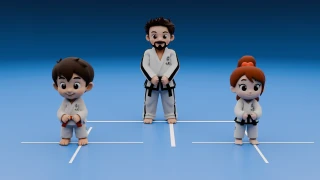
Four Directions Block (Kids)
Four Direction Block (Saju Makgi) is a fundamental exercise in ITF Taekwon-Do that teaches children how to block correctly while moving in four directions. By practicing basic blocks to the front, back, left, and right, students develop coordination, balance, correct walking stance, and defensive awareness. This exercise helps children understand timing, posture, and control, forming a strong foundation for patterns, self-defence, and future techniques.
Open learning